
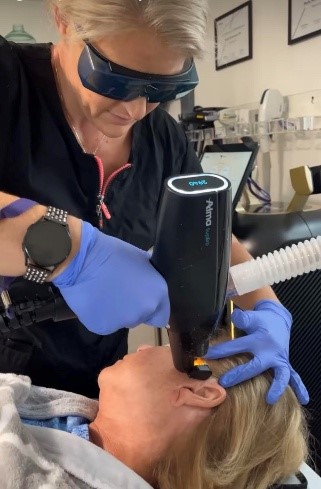
Pixel Erbium Laser
$1,000 full Face
The Pixel Erbium laser offers the best of both worlds in skin resurfacing: the genuine effectiveness of an ablative approach, combined with the gentler recovery and higher comfort of a non-ablative one. For patients who want real resurfacing results but aren’t ready for the recovery of a CO2 treatment, it’s often the ideal fit.
How It Works
The erbium laser operates at 2940nm — the wavelength water in the skin absorbs most efficiently — allowing it to vaporize thin layers of skin with exceptional precision and minimal heat spread into surrounding tissue. Using a fractional approach, it creates a pixel-sized grid pattern of tiny ablation channels while leaving adjacent tissue intact. This intact tissue accelerates healing while the treated zones drive collagen remodeling, skin tightening, and cell renewal.
What It Treats
Fine lines and wrinkles, acne scars, sun damage, uneven texture and tone, enlarged pores, pigmentation, and mild laxity. It can be used on the face, neck, chest, arms, and hands.
How It Compares to CO2
Erbium is absorbed more precisely by water in the skin, producing less residual heat than CO2. The result is a gentler treatment, less post-procedure redness, and faster healing — making it the right choice for patients who want meaningful resurfacing but need a more manageable recovery window.
What to Expect
Topical numbing is applied beforehand, with an optional nerve block available for additional comfort. Most patients feel warm prickling during treatment. Afterward, expect redness and a sunburn sensation transitioning into 5–7 days of peeling and mild swelling as the skin heals. Treatments are done as a single session or a series of three for maximum rejuvenation.
Injectable Testosterone Replacement Therapy
Injectable and pellet-based TRT are both excellent options for testosterone optimization — the right choice depends on patient preferences. Injections offer greater flexibility and faster dose adjustability while pellets offer unmatched convenience and steady consistent release. We’re happy to discuss what would be the best option for you.