
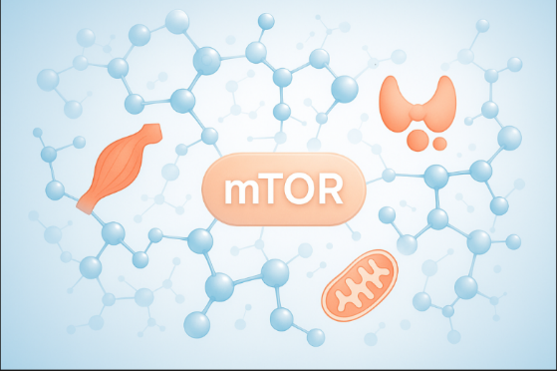
mTOR
The Cellular Growth Switch at the Center of Aging
Inside every cell in your body, a sophisticated molecular sensor is constantly reading the environment — checking nutrient availability, energy status, and incoming growth signals — and making a fundamental decision: grow and build, or repair and restore. That sensor is mTOR, which stands for Mechanistic Target of Rapamycin.
mTOR functions as a master regulator of cellular metabolism, coordinating protein synthesis, cell growth, and energy utilization in response to inputs like amino acids, insulin, and growth factors. When active, cells are in an anabolic, growth-oriented state — building proteins, expanding, and proliferating. This is entirely appropriate during development, recovery from injury, or muscle building. The problem arises when mTOR is chronically activated — which, in the context of modern life, it very often is.
The mTOR–Aging Connection
Decades of research have established a consistent finding: chronically elevated mTOR activity accelerates biological aging, while strategic downregulation extends both lifespan and healthspan. When mTOR is persistently “on,” several aging-related processes are set in motion:
Autophagy is suppressed — mTOR is the primary brake on autophagy, the cellular housekeeping process that clears damaged proteins, dysfunctional organelles, and cellular debris. Without regular autophagy, cellular clutter accumulates — one of the most consistent hallmarks of aging tissue.
Senescent cells accumulate — chronic mTOR signaling promotes the buildup of dysfunctional “zombie cells” that drive tissue inflammation and degradation.
Mitochondrial quality declines — sustained anabolic signaling without adequate recovery impairs the mitochondrial quality control processes that keep cellular energy systems running efficiently.
Cancer risk increases — unregulated mTOR activity is directly implicated in the initiation and progression of numerous cancers, essentially signaling cells to keep growing when they shouldn’t.
Why Strategic mTOR Cycling Matters
The goal isn’t to permanently suppress mTOR — that has its own consequences. The goal is to restore the rhythmic cycling between activation and inhibition that our biology evolved to depend on. Periods of downregulation trigger autophagy, allow cellular repair to run its full course, clear metabolic waste, and reset cellular function. This cycling is one of the most powerful mechanisms underlying biological resilience and longevity.
Evidence-backed strategies that support favorable mTOR cycling include:
Intermittent fasting and time-restricted eating — nutrient absence is one of the most reliable triggers for mTOR suppression and autophagy induction.
Caloric restriction — the most reproducible intervention for extending lifespan across species, largely mediated through mTOR modulation.
Exercise — particularly endurance training, which transiently activates AMPK, a key mTOR antagonist.
Dietary composition — reducing excess protein and refined carbohydrates limits chronic mTOR overstimulation.
Rapamycin — the drug mTOR is named after, now one of the most actively discussed pharmaceutical interventions in longevity medicine.
Why It Matters at Rejuvecare
Understanding mTOR reframes everyday choices — fasting windows, exercise timing, dietary patterns — not as optional lifestyle preferences, but as direct inputs into the molecular machinery that governs how quickly or slowly you age. Integrating mTOR awareness into a personalized longevity strategy means giving your cells the periodic downtime they need to clean house, repair damage, and operate with the efficiency of a much younger system.