
Neuromodulators
Botox- $14 per unit
Botox is the most widely performed cosmetic treatment in the world. It’s quick, effective, requires no downtime, and when done well, delivers natural looking results.
What It Is
Botox is a purified form of Botulinum toxin — a protein that temporarily relaxes the muscles responsible for creating expression-related wrinkles. When those muscles ease up, the lines they cause soften or disappear entirely, without affecting your natural expressions.
What It Treats
The classic indications are the “big three”: forehead lines, the vertical lines between the brows (the “11s”), and crow’s feet around the eyes. Beyond those, skilled injectors use Botox for brow lifting, bunny lines on the nose, lip lines, chin dimpling, neck bands, jaw clenching (TMJ), and excessive sweating (hyperhidrosis). It’s also used preventatively by younger patients to slow the formation of deeper lines over time.
What to Expect
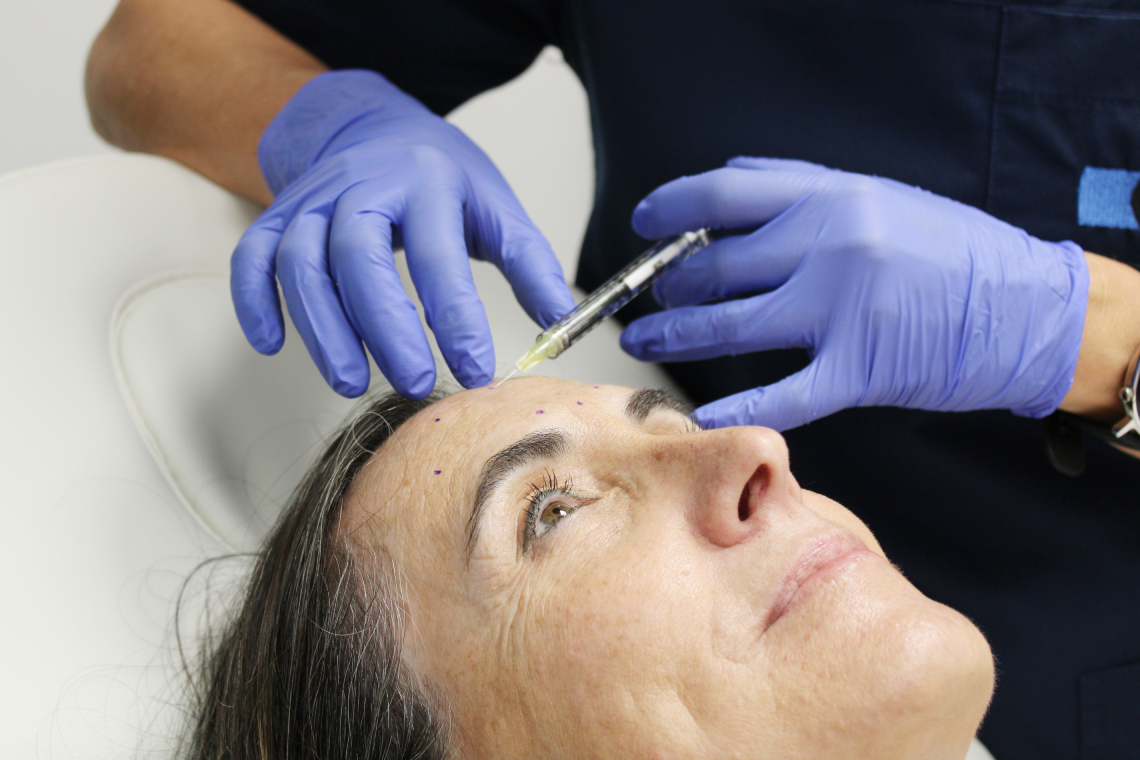
Treatment takes 10–15 minutes. A small amount is injected with a very fine needle directly into the targeted muscles — most patients describe it as a quick pinch. There’s no downtime. You return to your day immediately, with just a few simple precautions for the first couple of hours.
Results
Results begin to appear within 3–5 days and reach their full effect around three weeks. They typically last 3–4 months, after which muscle activity gradually returns. With consistent treatment, many patients find they need slightly less product over time as the targeted muscles become less active.
Good Fit For
Botox is appropriate for most healthy adults and works best on dynamic wrinkles — lines caused by muscle movement — rather than static wrinkles, which are present at rest.
Dysport- $12 per equivalent Botox unit
Dysport is a neuromodulator in the same family as Botox but formulated slightly differently giving it a few distinct characteristics that many patients and injectors genuinely prefer.
What It Is
Like Botox, Dysport is derived from Botulinum toxin type A and works by temporarily relaxing the muscles that create facial expressions.
How It Differs from Botox
The two key differences are speed and spread. Dysport tends to kick in faster — many patients see results within 2–3 days, compared to Botox’s 3–5. It also has a lighter consistency that allows it to diffuse more naturally across a broader area. For patients who want a soft, naturally relaxed look over a wide surface like the forehead, this diffusion can be an advantage. The tradeoff is that Dysport is less ideal in small, precise areas where a more contained effect is needed.
What It Treats
Dysport is FDA-approved for glabellar lines — the “11s” between the brows — and is widely used off-label for forehead lines, crow’s feet, brow lifting, neck bands, and the same full range of concerns as Botox.
Dosing & Cost
Dysport is dosed differently than Botox. It requires more units per treatment area but the cost per unit is lower, so the overall treatment price is generally comparable.
Results & Duration
Results typically last 3–4 months though some patients find Dysport lasts slightly longer for them. Individual response varies — many patients who switch from Botox to Dysport (or vice versa) find that one simply works better for their physiology.
Good Fit For
Dysport is a great option for both first-time neuromodulator patients and experienced patients looking to try something different — especially those who want faster onset, a naturally diffused result, or who feel their Botox results have been plateauing.
Xeomin- $12 per unit
Xeomin is the third FDA-approved neuromodulator and it brings something genuinely unique.
What Makes It Unique
Xeomin contains only the pure Botulinum toxin molecule. This matters because some patients develop antibodies to the accessory proteins found in other neuromodulators and this can lead to treatments becoming gradually less effective overtime. Xeomin has nothing extra for the immune system to react to, it’s the least likely to lead to treatment resistance. For this reason immunocompromised patients prefer Xeomin.
Onset & Duration
Xeomin’s timing is similar to Botox — results typically appear within 3–7 days and reach full effect around three weeks. Duration is also comparable, generally 3–4 months, though individual responses may vary.
Good Fit For
Xeomin is an ideal conversation to have with patients who have been doing neuromodulator treatments for years and feel like their results not lasting as long as they once did. It’s also a great starting point for new patients who want a clean, straightforward formulation. It works just as effectively as Botox and Dysport — and for some patients, even better.